A floating flange is a two-part system for connecting pipes. It is designed for easier assembly and maintenance. The official name for this system is a lap joint flange.
It is called “floating” because part of it can move. This movement helps solve common installation problems.
The Two Parts of a Floating Flange System
A floating flange is not one piece. It consists of two separate parts that work together.
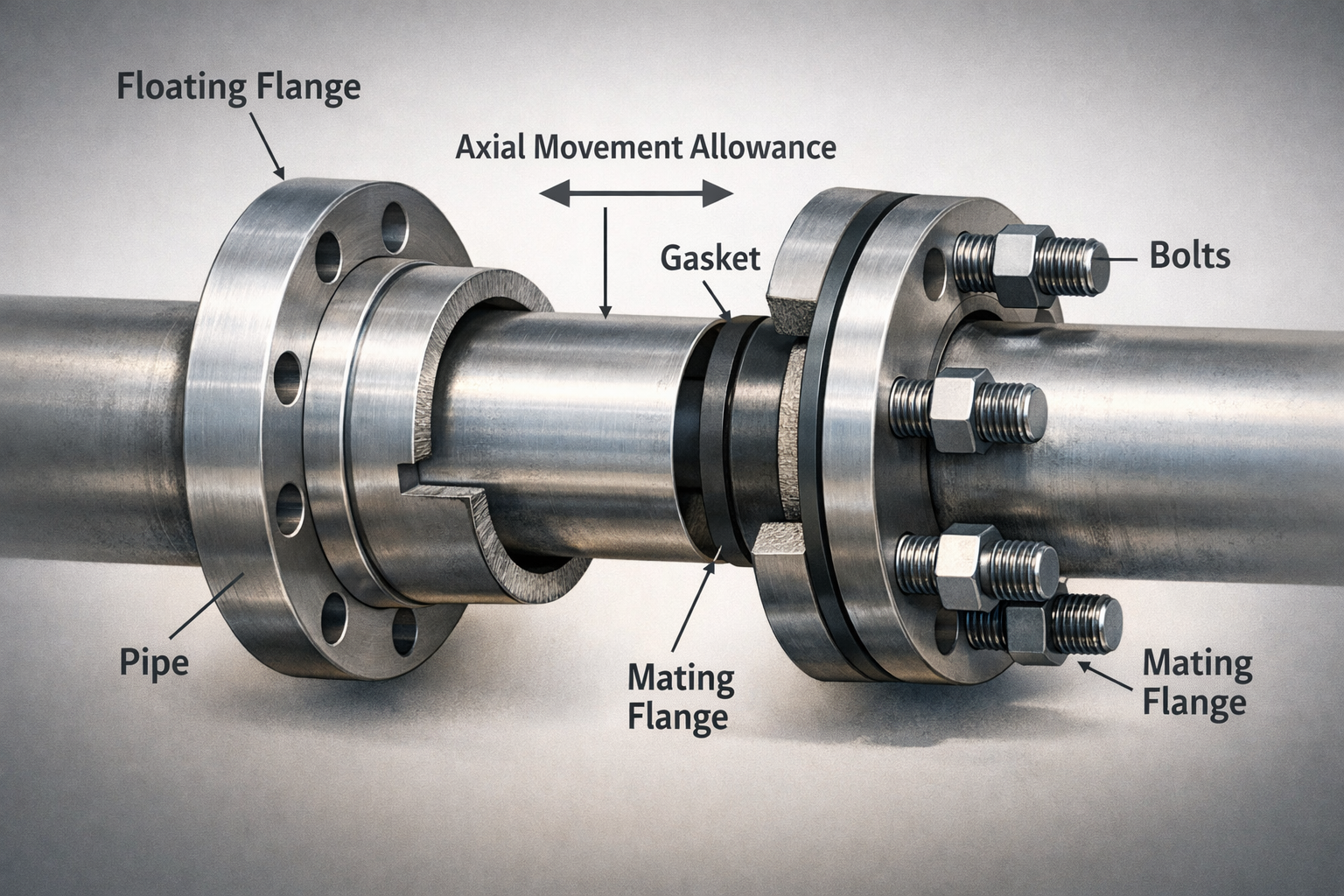
- Stub End: This is a short piece of pipe with a flared end that looks like a flange face. You weld the stub end directly to your main pipe.
- Backing Flange: This is the ring that looks like a standard slip-on flange. It is not welded to the pipe. It simply slides over the stub end and is free to rotate.
The sealing surface is on the stub end. The backing flange just provides the bolt holes and clamping force.
How It Works: A Step-by-Step Guide
Here is how a floating flange system is assembled:
- Weld the stub end to your pipe.
- Slide the backing flange onto the stub end from the pipe side. It sits behind the flared lap.
- Align the bolt holes of the backing flange with the mating flange on the other pipe or equipment.
- Insert the gasket between the two stub end faces.
- Bolt everything together. The backing flange clamps the stub ends together to form the seal.
Floating Flange vs. Fixed Flange: Key Differences
The table below shows how a floating flange system compares to a standard fixed flange, like a weld neck.
| Feature | Floating Flange (Lap Joint) System | Standard Fixed Flange (e.g., Weld Neck) |
| Connection to Pipe | Stub end is welded to pipe. Backing flange is loose. | Flange is permanently welded or fixed to the pipe. |
| Bolt Hole Alignment | Very easy. The backing flange rotates freely for perfect alignment. | Can be difficult. Requires precise alignment of fixed flanges. |
| Disassembly & Maintenance | Easy. The backing flange can be moved aside without cutting the pipe. | Difficult. Requires unbolting the entire fixed connection. |
| Material Cost Strategy | Stub end can be expensive alloy; backing flange can be cheaper carbon steel. | The entire flange is one material. |
| Best For | Systems needing frequent cleaning, inspection, or realignment. | Permanent, high-pressure systems where strength is critical. |
| Pressure Rating | Good for low to medium pressure. Not for very high-pressure service. | Suitable for very high pressure and temperature. |
Main Advantages of Using a Floating Flange
People choose floating flanges for three main reasons:
- Easy Alignment: The rotating backing flange makes lining up bolt holes simple. This saves time during installation, especially in tight spaces.
- Easy Maintenance: You can take the connection apart without special tools. Just unbolt it. The backing flange slides back, giving you full access. This is ideal for systems that need regular cleaning or inspection.
- Cost Savings on Materials: Only the stub end touches the fluid inside the pipe. You can make the stub end from a corrosion-resistant alloy (like stainless steel) and use a cheaper material (like carbon steel) for the backing flange.
Common Applications
You will find floating flange systems in specific industries and situations:
- Food & Beverage and Pharmaceutical: Where hygiene is critical and pipes need frequent cleaning and sterilization.
- Chemical Processing: For systems that require regular inspection or where pipe alignment is challenging.
- Piping with Expensive Alloys: To reduce the total cost by using less of the expensive material.
Frequently Asked Questions
Q: Is a floating flange the same as a slip-on flange?
A: No. A slip-on flange is welded to the pipe and is fixed. A floating flange’s backing ring is not welded and can rotate freely around the stub end.
Q: Can a floating flange handle high pressure?
A: It is generally not the first choice for very high-pressure systems. For extreme pressure, a weld neck flange with a strong butt weld is more reliable.
Q: What is the most common mistake when installing one?
A: The biggest mistake is welding the backing flange to the stub end or the pipe. This defeats the entire purpose. The backing flange must remain loose to rotate.
Q: Do I need a special gasket?
A: You use a standard ring gasket. It fits between the two faces of the stub ends, inside the circle of bolts.
A floating flange is a practical solution for piping systems that need flexibility. Its design makes installation and maintenance easier and can help manage project costs.
Need help deciding if a floating flange system is right for your application? We can provide the stub ends and backing flanges in the right materials and sizes. Submit your project details for expert advice and a quote: http://texasflange.com/lp12/