Flanges are basic parts of industrial piping systems. They connect pipes, valves, and equipment. This article explains what flanges are used for. We will cover their primary functions, where they are used, and why choosing the correct one matters.
What is a Flange?
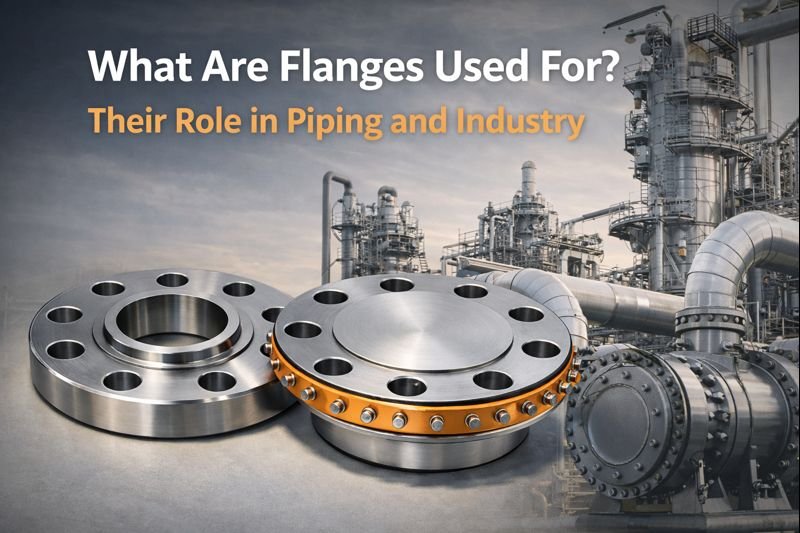
A flange is a rim or ring that helps connect objects. In piping, it is a disc with bolt holes. It gets welded to a pipe end or attached to equipment. A gasket sits between two flanges to create a seal. Bolts tighten the connection.
Primary Uses of Flanges
Flanges serve key purposes in a piping system.
- Connect Pipes. They join pipe sections together. This allows for long runs of pipe.
- Allow for Disassembly. They create access points. You can take apart a section for repair without cutting the whole line.
- Connect Different Components. They link pipes to valves, pumps, filters, or tanks.
- Close Off a Pipe. A blind flange seals the end of a pipe system.
- Change Direction or Branch. Special flanges let you add a branch line or change flow path.
- Isolate Sections. Components like spectacle blinds, placed between flanges, can isolate a section for safety.
Common Industries and Applications
Flanges are used wherever there are pipes.
- Oil & Gas: Wellheads, pipelines, refineries.
- Chemical Plants: Moving corrosive fluids.
- Power Generation: Boiler systems, steam lines.
- Water Treatment: Moving water and waste.
- HVAC: Heating and cooling systems in large buildings.
Note: For More info checkout our “Common Problems with Piping Flanges and How to Fix Them” Guide
Selecting the Right Flange
Choosing a flange is not generic. The wrong choice can leak or fail. You must match it to your system’s needs.
| Factor | Why It Matters | Common Examples |
| Pressure Rating | Must handle system pressure. | Class 150, 300, 600, 900. |
| Material | Must resist corrosion from the fluid. | Carbon Steel, Stainless 316, Alloy Steel. |
| Fluid Type | Determines material and gasket needed. | Water, Steam, Oil, Acid, Gas. |
| Temperature | Material strength changes with heat. | High-temp needs grades like F91 or 304H. |
| Standard | Must fit with other components. | ASME/ANSI, API, DIN, JIS. |
Flange Types and Their Specific Uses
- Weld Neck: Used for high stress and pressure. Common in oil and gas.
- Slip-On: Easier to install. Used for lower pressure.
- Blind: Closes off a pipe end.
- Socket Weld: For small diameter, high-pressure pipes.
- Lap Joint: Used where frequent disassembly is needed.
- Threaded: Screws onto pipe without welding. For low pressure.
Why Proper Flange Selection is Critical
A mismatched flange is a risk. It can cause leaks, shutdowns, or safety hazards. The flange must meet the system’s pressure, temperature, and chemical requirements. This is where working with an experienced supplier helps. They ensure the flange material and standard are correct for your job.
Frequently Asked Questions
Q: Can any flange connect to any pipe?
A: No. The flange must match the pipe’s diameter, pressure rating, and material. Standards must also align.
Q: What’s the difference between ANSI and DIN flanges?
A: They follow different design standards and dimensions. ANSI is common in the US. DIN is common in Europe. They are generally not interchangeable.
Q: How do I know what pressure class I need?
A: Your system engineering specifications will state this. It is based on the maximum operating pressure and temperature.
Q: Can you get flanges in special materials?
A: Yes. Beyond common carbon steel, flanges come in alloys like Hastelloy C-276, Inconel 625, or Titanium for severe corrosion or high heat.
Conclusion
Flanges are used to build, access, and maintain pipe systems. Their job is to provide a secure, sealed, and removable connection. Choosing the right one requires attention to detail.
This can be complex. If you need help specifying a flange for pressure, material, or standard, our team can assist. We provide flanges for all applications.
Get a quote or ask a technical question for your project here: http://texasflange.com/lp12/